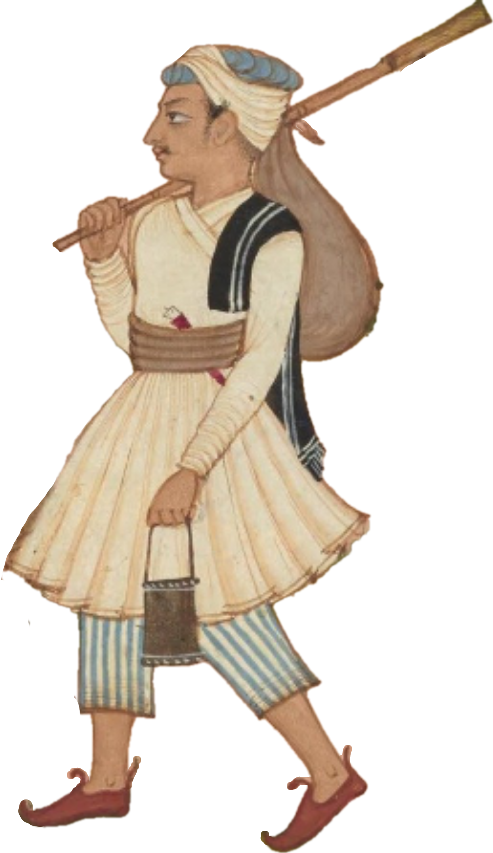
“I set out alone, having neither fellow-traveller in whose companionship I might find cheer, nor caravan whose party I might join, but swayed by an overmastering impulse within me and a desire long-cherished in my bosom to visit these illustrious sanctuaries. So I braced my resolution to quit all my dear ones, female and male, and forsook my home as birds forsake their nests.”
-Ibn Battuta (1304-1369)
“I set out alone, having neither fellow-traveller in whose companionship I might find cheer, nor caravan whose party I might join, but swayed by an overmastering impulse within me and a desire long-cherished in my bosom to visit these illustrious sanctuaries. So I braced my resolution to quit all my dear ones, female and male, and forsook my home as birds forsake their nests.”
That was the quote that inspired my blog when I started it six years ago now. It is from Ibn Battuta (1304-1369), one of the most famous world travellers, who went all the way from his home in Tangier, Morocco, to China (yes, that is even farther than Marco Polo travelled). Back then, travel was uncommon, and incredibly scary and dangerous as Ibn Battuta would have had to cross the Sahara desert to reach where he wanted to go. The majority of people who travelled far away went for pilgrimage – either Hajj for Muslims, or various other pilgrimages for people of other faiths. But for Ibn Battuta, he was so infected by the travel bug that when he reached Mecca, he did not stopped, but continued on to East Asia.
What is notable about him is not only the great distance he travelled, but also his approach to travel writing. Since few people travelled so far, most travel writers would exaggerate, adding fanciful and mysterious accounts since few people could check them for their veracity (if the readers even cared to, that is). But Ibn Battuta’s writings were so accurate that hundreds of years later scholars could visit the same mosque and find the same elements lying in the same place as Ibn Battuta had described him.
Personally, I fall more into Ibn Battuta’s side when it comes to my writing – in this world there are things so fabulous that I don’t feel the need to falsify or exaggerate. This falls in line with the modern academic impulse, an impulse with which I began this blog many years ago.
Originally, “forsaking my nest” meant more that I would explore things I didn’t know, even get out of my comfort zone, but still largely from the relative comfort of my own home. In 2017, I only spoke of a figurative journey, but now, many years later, I really am travelling in the real world.
In September of last year (2023), I moved away from the country I grew up in for the first time. I shipped my things and with lots of help of friends and family, I settled into a new place in Venice, Italy. Now that I have physically forsaken my nest, moving countries and now travelling in India, it seems appropriate to revive this blog yet again.
Before flying to India this October, I stood in front of the train station between two bridges into Venice. It was my last night in my newfound home before travelling to India and I was feeling overwhelmingly sentimental. In this city where most people only arrive on a day trip, I had found a sense of regularity that I hadn’t had in years. Every day, five days a week, I would take the same bus down the same road to the same stop and walk up the same stairs to the PhD students’ office at Ca’ Foscari University. But this regularity provided not only a sense of peace and comfort, but also allowed me to notice the small changes from season to season. Every day I would look into the same waters of the canal, but they would be just a little bit different – perhaps a little more green, perhaps a little more rough, or a little higher tide than the day before.
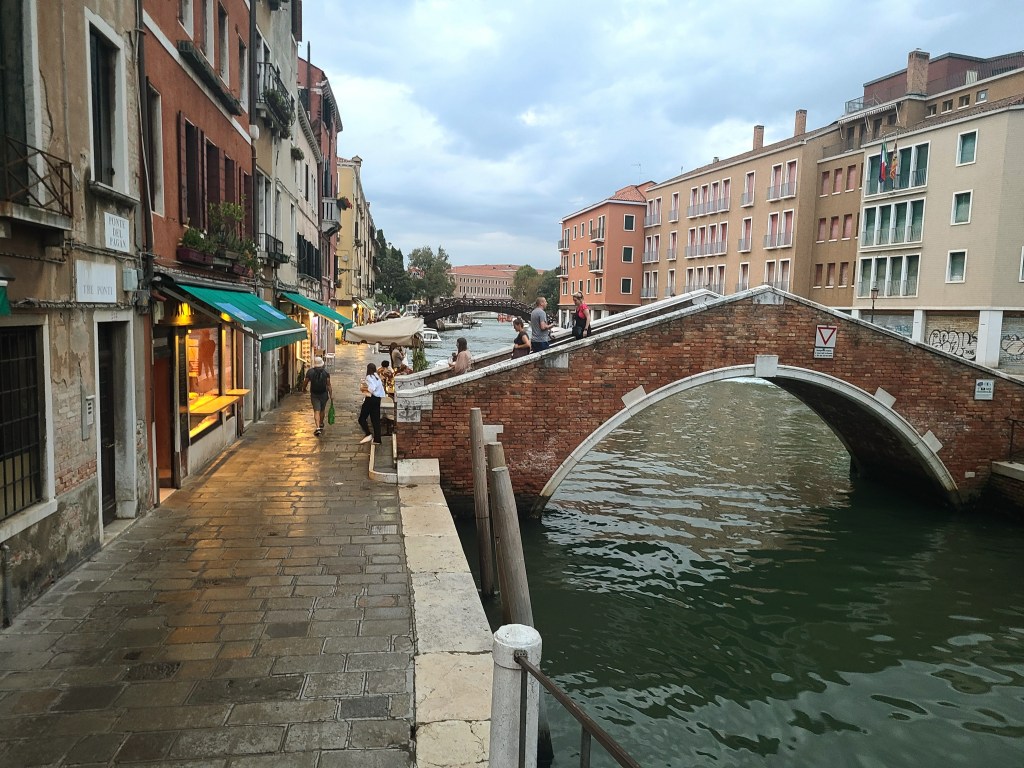
I hadn’t grown up near water. Sure, there were two rivers in my city of Calgary, Alberta, but I hardly went near them and didn’t think of them much. I knew my city by the crisp cold air and the scent of evergreen trees as all other plants lay dormant beneath the snow for six months a year or more. I had never felt that sailors’ yearning for the ocean as many did, and I had no interest in going for a holiday at the beach. Yet somehow I ended up living in this city defined by water, held together by tree trunks plunged into the Venetian lagoon.
I wasn’t in love with Venice before I got there, as many others often were, so I was spared the disappointment that many poor tourists feel. I had heard far too much about the overcrowded tourist kitsch alleyways to expect any magical feelings of romance to crop up in this so-called Most Serene Republic. “I’ll let the city woo me,” I thought… “if it wants to.” And yes, woo me it did. After a year living there, I really do love Venice – just not for the reasons most people expect to. If you imagine Venice as this pristine baroque beauty, you will be sorely disappointed. Venice is not baroque; its renaissance facades peel to reveal layers of tension underneath. To reside in Venice is itself an act of protest. Whether it’s the government or the tourists or the capitalist interests of investors, those who have power in Venice seldom act to make it better for residents. Measures like charging a 5 euro fee to enter the city are not only unhelpful but even harmful, giving the city an even increasing feel of Disneylandia. That is why so many residents protested the Venice entry fee, complaining of this “Disneyfication” of the city. And while we didn’t have to pay the fee as residents, the ticket just added another complication to the already complicated lives that we live in this lagoon city.
“Venice is not for beginners” I often say, and though it may seem a tired trope it really is true. I couldn’t just learn a new map when I moved there, but instead had to discover an entirely new way of mapping. I had gotten accustomed to the bird’s eye view form of navigation, coming from North America where the cities often follow a Cartesian grid where you rarely lose sense of South and North. I could easily trace the grid with my mind, always knowing where to go. But in Venice the (pedestrian) roads turn ever so slightly that within a few minutes when you think you’ve been walking straight you’ve actually turned around a good 90 degrees. And then when you go down what you think is the same alley, all of a sudden a dead end appears where it hadn’t before. When the streets can end abruptly at the water, it feels as if the city’s walls slide back and forth like a living maze, just to throw you off course.
And as the crime writers would have us believe Venice really is a city cloaked in mystery. Venice has not just one but multiple universities, including my own with over 20 000 students. But, you would never know – it is there, but it is invisible. My own department is marked by nothing but a tiny little plaque in Italian, with an open door to a ground floor with nothing in it. Curious tourists poke their heads in thinking “What is this charming little place?” never imagining that it is actually a library and the office of many students and faculty. We (or at least I) complain about the tourists, the hot sticky weather, and the administrative nightmare that it is a city of a hundred canals. But really, we love it. Living in Venice I became accustomed to looking at the water every day, hearing the church bells toll every hour, and seeing the same friends each day at school. My life was simple there; I didn’t try to visit all these tourists places but just went to school, had lunch, and went home. And even as we complain, really the complaining becomes a pass time. And while some days it feels as if we are drowning in tourism, really the vibrancy and movement in that multicultural city is something we cherish.
This city can be best encapsulated in a single graffiti: in big letters “Tourists go home!” but with a cheeky little note beneath that says… “with me.”

So now that it was my time to travel again, now further East to India, I was sad to be leaving my strange ridiculous sacriligeous Italian home. But I had to do as Marco Polo and Niccolo Manucci and all theother Venetian travellers did, and head on my way. Because as much as the womb-like cocoon of Venice’s watery streets tempts you to stay, Venice will send you floating down the Adriatic sea to find wonders far away.
 as birds forsake their nests
Leave a comment